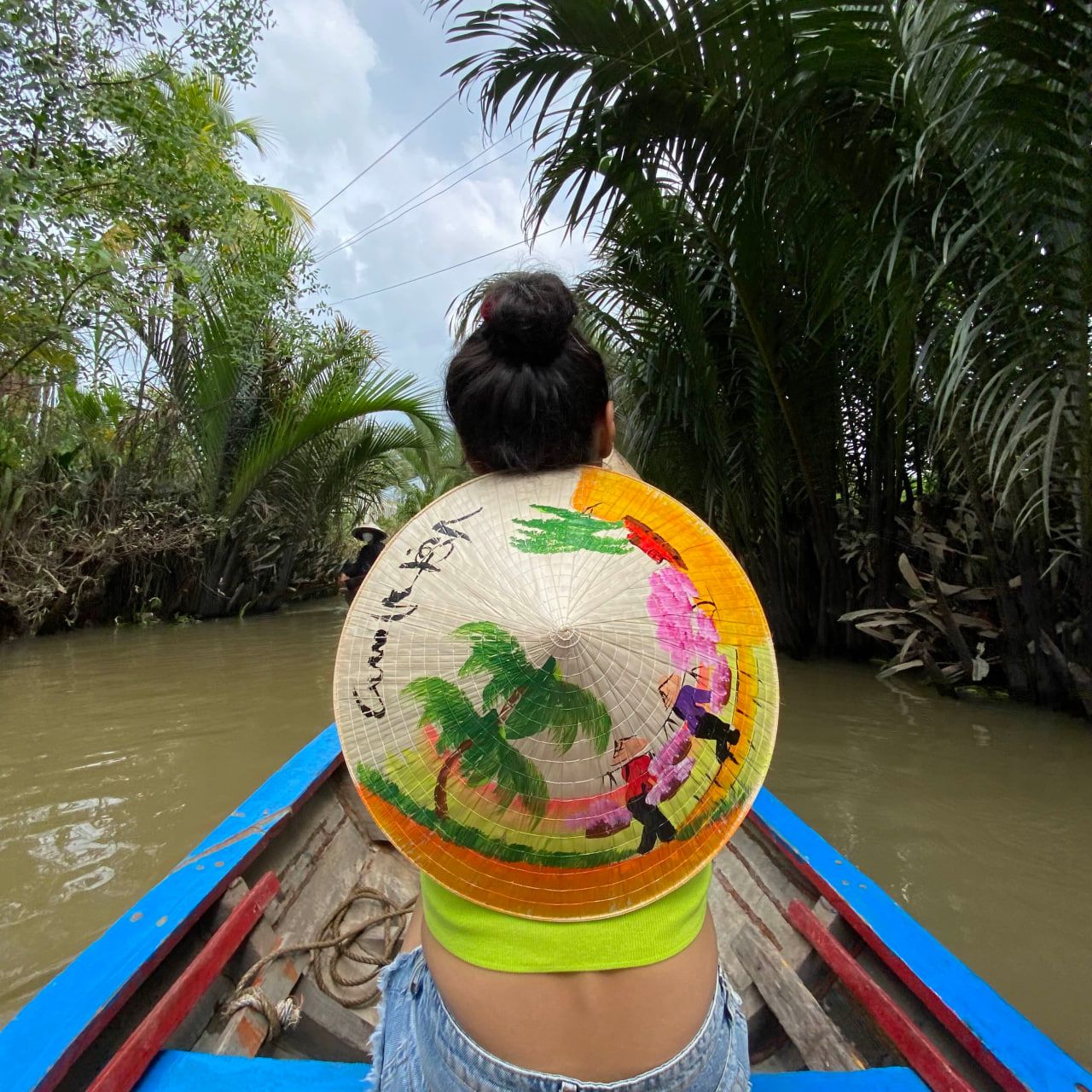

The Mekong Delta doesn't reveal itself easily. Most travelers see only its surface—floating markets photographed at dawn, brief sampan rides through narrow canals, hurried stops at fruit orchards where they're handed dragon fruit and shuttled back to waiting buses. The guidebooks dutifully catalog these well-worn routes, and they're not wrong to do so. These experiences have their place.
But the Delta's true soul lives elsewhere, in moments that can't be staged or packaged, in encounters that unfold only when you slow down enough to notice them. It resides in the rhythm of a grandmother's hands shaping rice paper, in the quiet dignity of a monk tending his garden at first light, in the laughter that erupts when you fumble through your first attempt at casting a fishing net.
In 2026, as the Mekong continues its ancient flow toward the sea, a different kind of travel is emerging here. Not faster or more efficient, but deeper and more intentional. At Innoviet Travel, we've spent years cultivating relationships with communities throughout the Delta, earning the trust that allows us to open doors typically closed to visitors. What we've discovered are experiences that transform travel from checklist completion into genuine connection, from observation into participation, from tourism into something closer to temporary belonging.
Here are five such experiences, each offering a window into the Mekong Delta's authentic soul.
1. Dawn with the River Guardians: Fishing with Trà Vinh's Fourth-Generation Fishermen
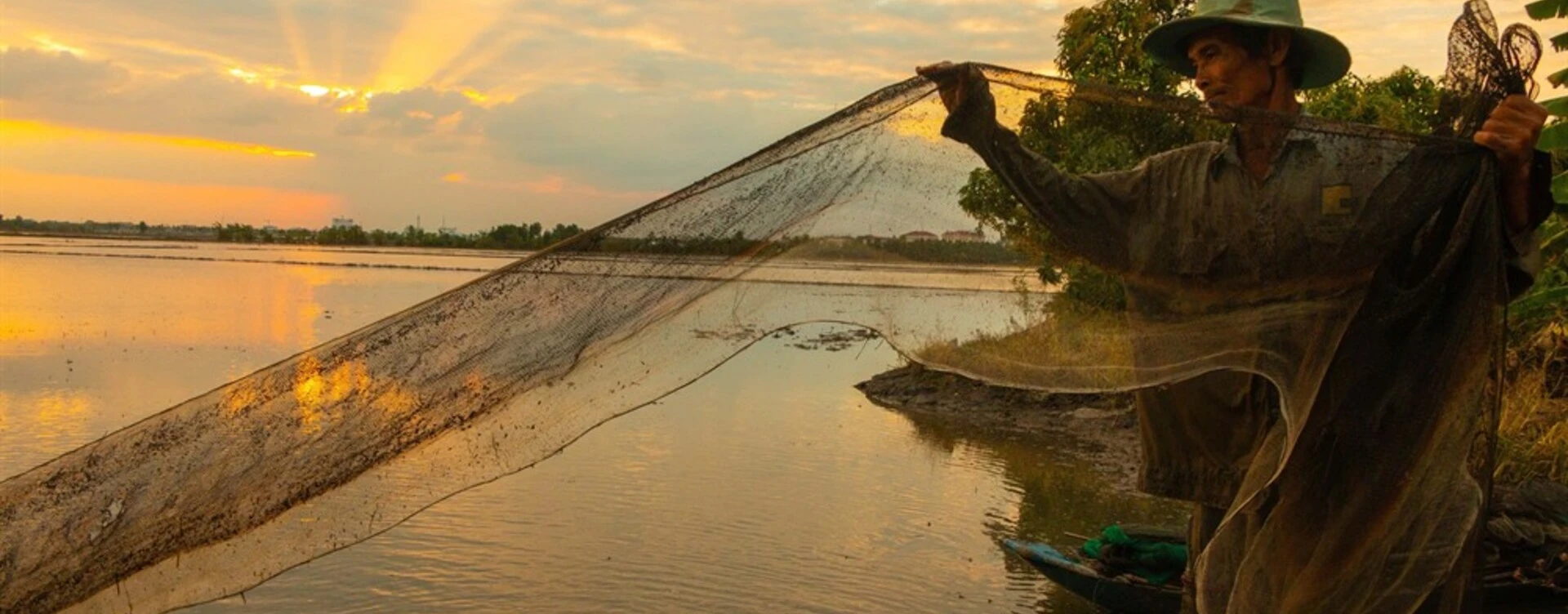
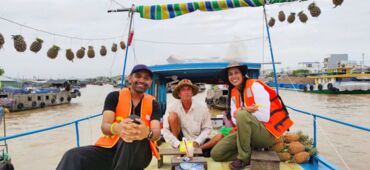
Long before the first tour boats sputter to life, before market vendors arrange their produce pyramids, the river belongs to the fishermen. At 4:30 AM, when darkness still clings to the Mekong's tributaries, Mr. Sáu and his family are already working their nets, continuing a tradition that stretches back through four generations.
This isn't a demonstration staged for cameras. When you step into Mr. Sáu's weathered wooden boat, you're entering his workspace, his livelihood, his inheritance from his father and grandfather before him. The pre-dawn air sits heavy with moisture. Mist rises from the water's surface like the Delta breathing. The only sounds are the gentle lap of water against hull and the occasional splash of fish breaking surface.
Mr. Sáu doesn't speak much English, but his hands tell stories his words cannot. Watch how he reads the river—where water swirls over submerged logs, where current patterns indicate fish movement, where generations of intimate knowledge guide each decision about where to cast, when to wait, when to pull. His son, Minh, translates occasionally, but mostly there's a comfortable silence punctuated by soft instructions as he teaches you to cast the traditional throw net, a skill that looks simple until you try it yourself.
The net collapses. The weighted edges fail to spread properly. The fish, quite sensibly, remain exactly where they are. Mr. Sáu laughs, not unkindly, and demonstrates again. His net opens into a perfect circle, settles onto the water like a whisper, sinks. When he pulls it back, silver bodies flash in the mesh.
Your third attempt succeeds—barely—catching exactly one small fish. The family celebrates this minor victory as though you've won an Olympic medal. Mrs. Sáu, who appeared from somewhere with a thermos of strong Vietnamese coffee, claps delightedly. This moment of shared laughter as dawn light finally breaks across the river matters more than any photograph.
But what makes this experience truly remarkable isn't the fishing itself—it's what happens afterward. Back at the family's riverside home, you help clean the morning's catch while hearing stories of how fishing has changed. How larger commercial operations have depleted fish stocks. How climate change has altered seasonal patterns that Mr. Sáu's grandfather could predict with certainty. How they're adapting, diversifying, hoping Minh will choose to stay rather than joining the exodus of young people to Saigon.
You begin to understand that this isn't quaint cultural preservation but an ongoing negotiation between tradition and survival, between heritage and economics. The fish you helped catch become breakfast—grilled over charcoal, served with fresh herbs from the garden, rice from their paddies, and more conversation about water levels, government policies, market prices, hopes for grandchildren not yet born.
This is the Mekong's soul: not frozen in time like a museum exhibit, but vibrantly alive, adapting while holding onto what matters most.
2. The Secret Ceremony: A Khmer Family's Full Moon Blessing
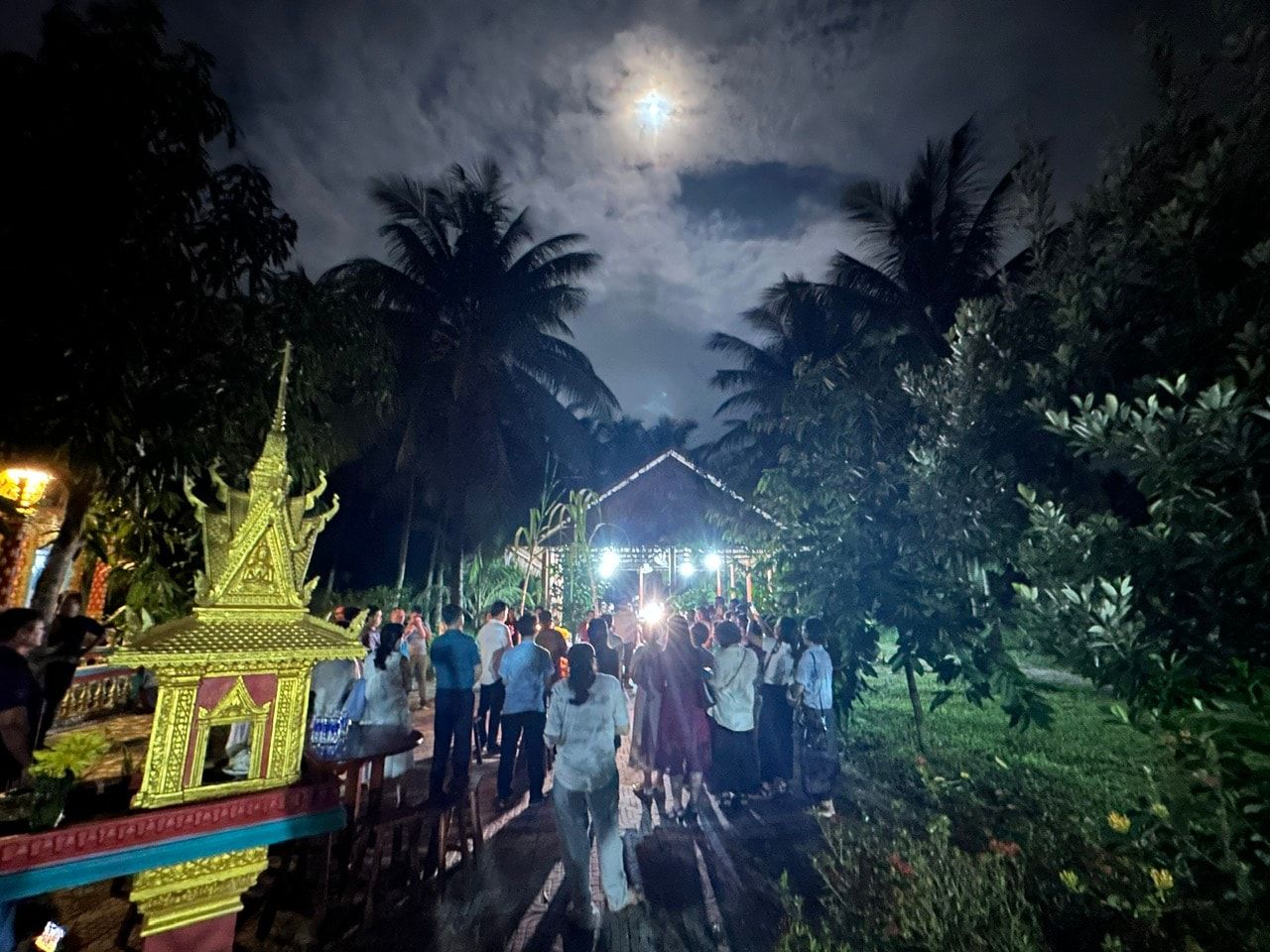
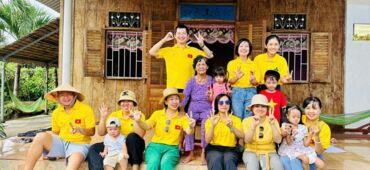
A Khmer Family's Full Moon Blessing - Photo taken by: Hoàng Lân
The Mekong Delta is home to Vietnam's largest Khmer population, descendants of the ancient Khmer Empire whose cultural traditions remain beautifully intact despite being a minority in modern Vietnam. While tourists visit the region's stunning Khmer pagodas, few witness how Buddhism lives in daily practice within Khmer homes.
Through our relationship with the Thach family in Trà Ơn district, Vĩnh Long province, we can offer something extraordinary: the opportunity to participate in their monthly full moon ceremony, a deeply personal spiritual practice rarely shared with outsiders.
The invitation comes with responsibilities. You must arrive with appropriate offerings—fruit, flowers, incense—purchased together at the local market where Mrs. Thach is greeted by name at every stall. You must dress respectfully, remove shoes, and follow protocols you don't fully understand but can observe and mirror. Most importantly, you must approach with genuine respect rather than anthropological curiosity.
The Thach home is modest—concrete walls, tile floors, the ubiquitous family altar that stands in nearly every Vietnamese home. But during the full moon ceremony, it becomes sacred space. Incense smoke curls toward the ceiling. Candlelight flickers across faces. Mrs. Thach, the family matriarch, leads prayers in the Khmer language, her voice rising and falling in ancient rhythms. Her daughter translates occasionally, explaining how they're honoring ancestors, seeking blessings for family members, expressing gratitude for the month's provisions.
You're invited to light incense, to place your offerings on the altar, to bow at the appropriate moments. No one expects perfection—the Thach family understands you're learning. What they appreciate is sincerity, the willingness to participate rather than simply observe from a disconnected distance.
After the ceremony, formality dissolves into warmth. There's tea and conversation, stories about how these traditions connect the family to their heritage, to ancestors they never met but still honor, to a sense of identity that persists despite decades of cultural pressure toward assimilation. Grandmother Thach, ninety-three years old with a smile that lights up the room, takes your hand and speaks in rapid Khmer that her granddaughter translates: "She says you have a good heart for coming to learn our ways. She hopes you'll remember us."
You will. Not because you've witnessed an exotic ceremony, but because you've been welcomed into the intimate spiritual life of a family, trusted with something precious, and given a glimpse of how faith shapes daily life in ways no temple tour can reveal.
3. The Grandmother's Hands: Mastering Traditional Sedge Mat Weaving in Định Yên
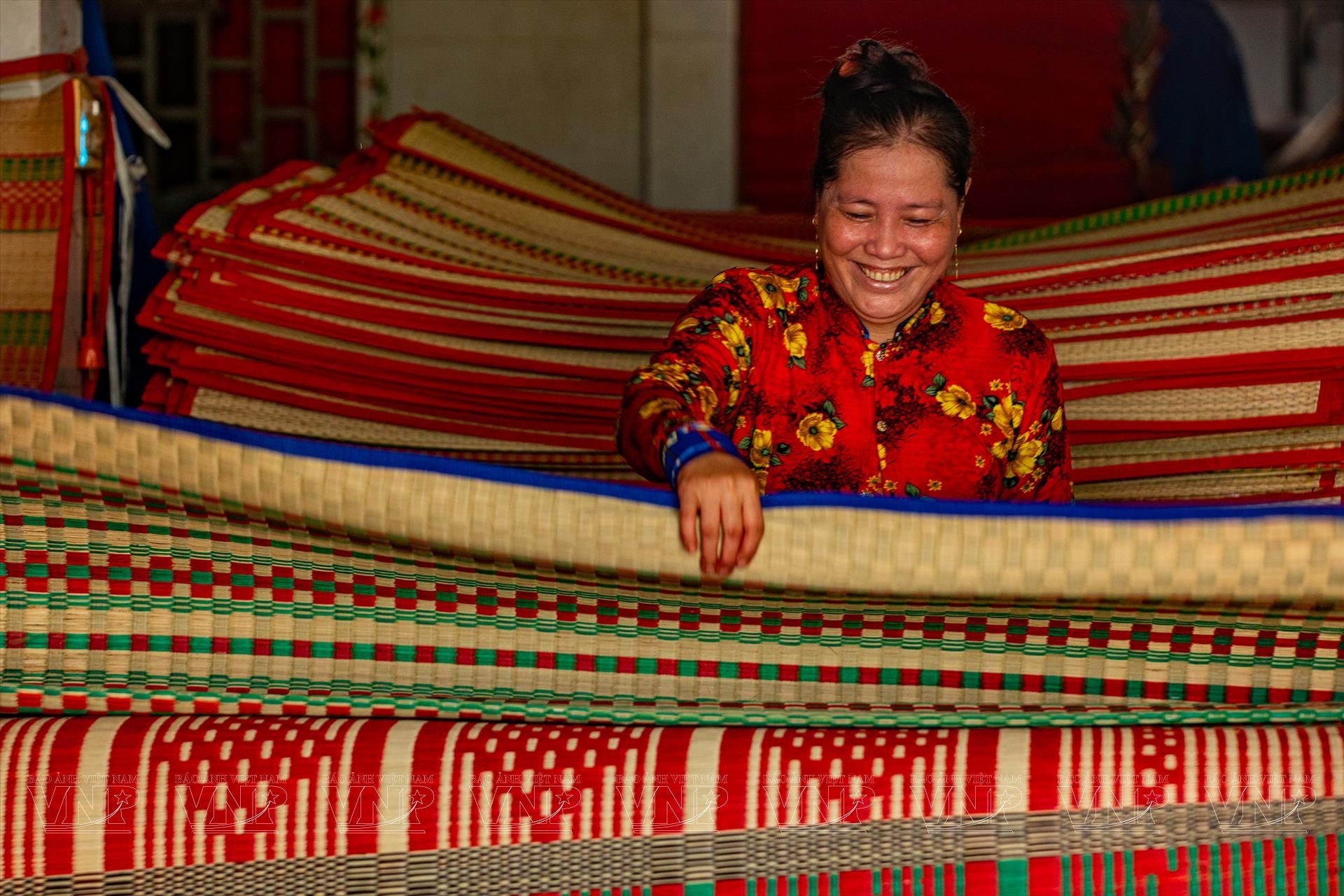
In Định Yên village, a craft village about an hour from Vĩnh Long city, the art of sedge mat weaving has sustained families for over two centuries. But this isn't a tourist attraction with neat displays and gift shop at the exit. This is a working village where every hand contributes to production, where quality matters because reputation determines income, where tradition meets market demands in complex negotiation.
Mrs. Năm has been weaving mats for sixty-four of her seventy-eight years. Her hands move with impossible speed, fingers dancing through sedge strands, creating intricate patterns from muscle memory so deep she can weave while conversing, while supervising grandchildren, while keeping one eye on the rice cooking over the fire.
When you arrive, she stops. Brings you tea. Explains through her daughter-in-law, Lan, that you'll start with the basics. Lan, who speaks excellent English after years of hosting the occasional visitor brought by people like us, becomes translator, guide, and co-conspirator in your education.
The sedge is rougher than it looks, and after ten minutes your fingers ache. Mrs. Năm's pattern emerges clean and tight. Yours looks like a bird's nest constructed during an earthquake. The family finds this hilarious. Even the usually solemn grandfather cracks a smile. But they don't let you quit. Lan adjusts your grip, demonstrates the rhythm again, and slowly—very slowly—you begin to feel how the strands want to move, where tension matters, how pattern emerges from repetition.
Hours pass in concentration punctuated by breaks for more tea, for fruit, for casual conversation about life in the village. You learn that Lan has a university degree but returned to Định Yên because "someone needs to keep the craft alive, and besides, the city is too fast." You hear about the cooperative they formed to negotiate better prices with wholesalers. About the challenge of keeping young people interested when factory work pays more. About innovation in design that honors tradition while attracting modern buyers.
By day's end, you've completed maybe one square meter of usable mat. It's crooked and loose in places, but Mrs. Năm nods approvingly and insists you keep it. "So you remember that beautiful things take time," Lan translates. "And that every craft holds someone's history."
That mat, imperfect and precious, will mean more than any souvenir you could buy.
4. Monk's Garden, Monk's Wisdom: Dawn Meditation and Philosophy at an Unnamed Pagoda
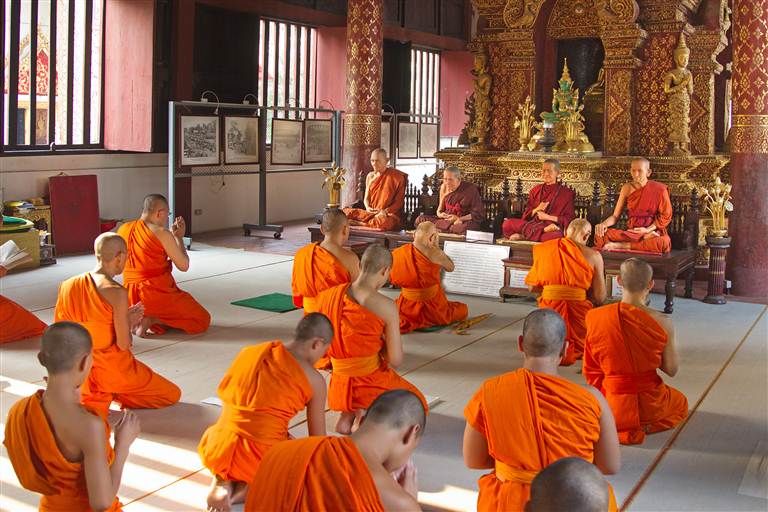
We don't publicize which pagoda offers this experience. The monks who welcome visitors into their dawn practice do so selectively, preferring depth over volume, quality of exchange over quantity of visitors. Respect for their wishes means protecting their privacy while sharing the possibility of connection.
What we can say is this: certain Khmer-Theravada pagodas in the Delta welcome sincere seekers for morning meditation and informal philosophical discussion. These aren't performances for tourists but genuine invitations into spiritual practice and dialogue.
You arrive at 5:00 AM, when darkness still holds but morning inevitably approaches. The pagoda grounds are peaceful in that way only deeply sacred spaces manage—silent but not empty, still but not stagnant. Monks in saffron robes move through the garden, tending plants, sweeping pathways, preparing for the day's first prayers.
A senior monk—greets you warmly and invites you to sit in the meditation hall. No elaborate instruction, no complex doctrine, just simple guidance: "Sit comfortably. Breathe naturally. Watch your breath. When your mind wanders, gently return attention to breathing. We'll sit for thirty minutes."
Thirty minutes proves surprisingly long and remarkably short simultaneously. Your back aches. Your mind performs Olympic-level gymnastics, bouncing from grocery lists to work stress to wondering if you're doing this correctly. But gradually, occasionally, there are moments of genuine quiet, of presence, of something you might call peace if you weren't too busy experiencing it to name it.
After meditation comes conversation over simple breakfast—rice porridge, pickled vegetables, tea. Venerable Phan asks thoughtful questions about your life, your work, your concerns. Then offers perspectives from Buddhist philosophy—not preachy sermons but gentle observations about impermanence, suffering, compassion, attachment.
What emerges isn't a theology lesson but genuine dialogue between different worldviews, different ways of understanding human existence. Venerable Phan is curious about Western perspectives, about how people find meaning in secular contexts, about whether happiness and success have become confused in modern life.
The conversation meanders through topics both profound and mundane: parenting challenges, climate anxiety, the difficulty of staying present in a distracted world, whether smartphones help or hinder connection. Buddhist philosophy becomes less abstract when applied to deciding how to balance career ambition with family time, or whether to check email during dinner.
As morning light fills the garden and the pagoda begins its daily routines, Venerable Phan walks you through the grounds, explaining medicinal plants cultivated by monks for centuries, pointing out nesting birds, embodying the integration of spiritual practice with practical life.
This experience won't convert you to Buddhism or solve your problems. But it might offer perspective, quiet space for reflection, and the gift of wisdom shared freely across cultural and philosophical divides.
5. The Night the River Speaks: Bioluminescence and Stories on a Midnight Canoe Journey
The Mekong and its tributaries hold secrets revealed only in darkness. On moonless nights, when conditions align perfectly—warm water temperature, particular salinity levels, absence of artificial light—colonies of bioluminescent plankton illuminate these waters with otherworldly blue-green light.
This phenomenon can't be scheduled or guaranteed. It's not something we can promise will happen on your specific travel dates. But when stars align and our local partners send word that conditions are right, we can offer an experience bordering on magical.
Picture this: near midnight, you slip into a narrow canoe with a local guide whose family has navigated these channels for generations. No motor, just paddles moving silently through black water. Stars above reflect below until you're suspended between two infinities.
Then, as your paddle strokes disturb the water, light blooms—electric blue trails following every movement. Your guide dips their hand and pulls it through the water, leaving a glowing wake. Fish dart away in neon streaks. The entire river seems alive with cold fire.
In this bioluminescent wonder, your guide begins sharing stories. Not rehearsed tales for tourists, but real stories about this river—about ancestors who traveled these same channels by night to avoid colonial patrols, about floods that destroyed villages and communities that rebuilt together, about ghosts said to haunt particular bends, about changes witnessed over decades as the Delta transformed.
These stories arrive unhurried, punctuated by long silences where the only sound is water dripping from paddle blades, each drop trailing light as it falls. The stories don't follow linear narrative or building dramatic arc. They meander like the river itself, branching into tributaries of memory, pooling in quiet eddies of emotion, flowing always toward the sea.
You share stories too, about your own life, your own rivers—literal or metaphorical. Somehow, suspended in darkness lit only by living light, normal social barriers dissolve. Vulnerability feels natural. Connection happens.
This midnight journey becomes meditation, ceremony, and conversation simultaneously. You're not "doing an activity" but participating in something timeless, in the eternal human practice of storytelling by water, of finding kinship with strangers through shared wonder.
The Deeper Journey: What These Experiences Share
These five experiences differ dramatically in content and setting, but they share essential qualities that separate superficial tourism from meaningful travel.
First, they all involve genuine participation rather than passive observation. You're not watching life in the Mekong Delta from air-conditioned buses or controlled viewing platforms. You're stepping into actual lives, actual practices, actual moments—trying and often failing, asking questions that reveal your ignorance, accepting hospitality with humility.
Second, they all require presence and patience. These aren't experiences you can rush through for a photo and move to the next attraction. They unfold at their own pace, demanding attention, rewarding presence with depth and connection.
Third, they all involve reciprocal relationship rather than transactional exchange. Yes, money changes hands—local hosts are compensated fairly for their time and expertise. But the encounters transcend economic exchange into something richer: mutual curiosity, shared laughter, genuine teaching and learning flowing in multiple directions.
Fourth, they all reveal complexity rather than reinforcing stereotypes. The Mekong Delta you encounter through these experiences isn't the romanticized "simple life" of tourist brochures or the poverty-stricken "developing region" of aid organization campaigns. It's a complex landscape where people navigate modernity and tradition, global markets and local values, economic pressure and cultural identity with creativity, dignity, and remarkable resilience.
Finally, they all leave you changed in ways both subtle and significant. You return with more than photographs and stories. You return with expanded sense of what's possible, of how life can be lived, of what matters. You return with faces and names and moments that resist easy categorization, that complicate comfortable assumptions, that insist on the irreducible humanity of people whose lives appear radically different from your own.
Traveling the Mekong in 2026: An Invitation
The Mekong Delta stands at a crossroads. Climate change threatens traditional livelihoods. Young people migrate to cities seeking opportunity. Global economic forces reshape local communities. Cultural traditions face pressure from homogenizing modernity.
Yet life here remains vibrantly resilient, adaptive, and richly meaningful. Families preserve traditions while embracing necessary change. Communities support each other through challenges. Laughter and hope persist despite real difficulties.
How travelers engage with this complex reality matters. Tourism can be extractive, reducing living communities to picturesque backdrops for vacation photos. Or it can be generative, creating meaningful exchange that benefits both visitors and hosts, that supports cultural preservation while respecting community agency, that enriches everyone involved.
At Innoviet Travel, we believe in the latter approach. The experiences described here aren't available in any guidebook because they're not products we've created but relationships we've carefully cultivated over years. They exist because families, monks, fishermen, and artisans have chosen to trust us with entry into their lives, to share what's precious with visitors willing to approach with respect and genuine curiosity.
We extend that trust to travelers who share our values: who seek depth over breadth, connection over collection, transformation over transaction. Who understand that meaningful travel requires vulnerability, patience, and willingness to be changed by what you encounter.
If this resonates with how you hope to travel, we invite you to explore the Mekong Delta's soul with us. Not as tourists consuming experiences, but as humble guests honored to participate briefly in lives and communities far richer than any guidebook can capture.
Contact Innoviet Travel to design your authentic Mekong Delta journey, crafted around the relationships, access, and experiences that reveal the region's true soul.
We specialize in authentic journeys that focus on local life, calm waterways, and meaningful cultural connections. Contact us today, and let our local team design a Mekong Delta experience that moves at a comfortable pace and reflects the true spirit of the region.
Vietnam Package Tour - Immersive 15-Day Journey Through Vietnam
Saigon Walking Tour - Sai Gon Hidden Alleys
Small Group Saigon Walking Tour
Half-Day Ho Chi Minh City Walking Tour
1-day Mekong tour from Can Tho | The Myst Mekong
Cu Chi Tunnels & Mekong Rural Life
Mekong Delta 1-Day Tour - Ben Tre boat and bike experience
Mekong Delta homestay 2 days tour with cycling trip in non-touristy villages
Mekong Delta tour 3 days with homestay - cycling - Cai Rang floating market

Explore more: How Many Days In Vietnam? Best Time For First-Timers To See The Highlights
We hope that your experience will be nothing short of amazing
JOIN OUR FACEBOOK GROUP HERE to learn our tips as well as discuss them before going to these locations.
Book your Mekong Delta Homestay Tour now and create memories you’ll treasure long after your trip ends.